
How to Remove Love Bugs From Your Car (Without Hurting the Paint)
If you've driven I-45, 290 or the Beltway during love bug season, you know the drill. The front bumper, grille, mirrors and windshield end up covered. Love bugs are more than ugly. Left to bake in the Houston sun, their remains can stain and even etch your clear coat. Here's how to get them off safely, and how to make the next swarm easier to deal with.
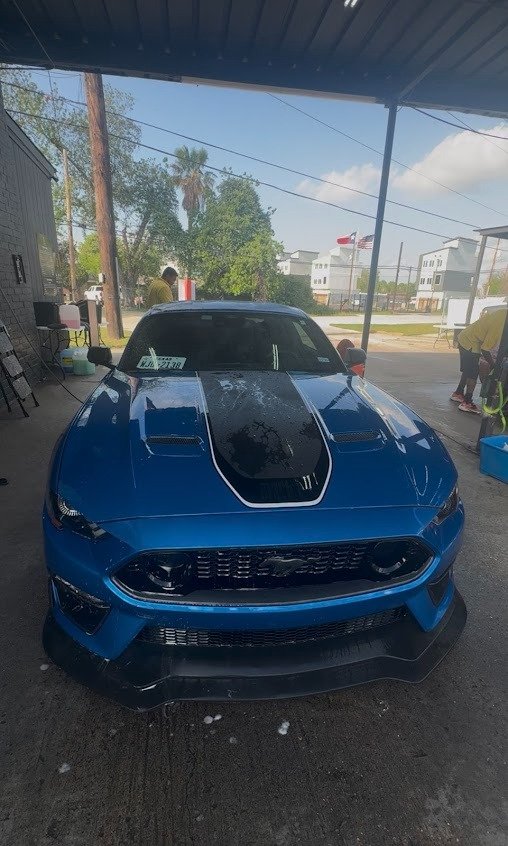
When love bug season hits Houston
Love bugs show up on the Gulf Coast in waves, usually once in late spring and again in late summer into early fall. The exact timing shifts from year to year with the weather. During a heavy flight they gather near highways, which is why commuters get the worst of it. They're slow fliers, so at highway speed they hit the front of the car hard and stick.
Why you shouldn't leave them on
Bug remains are acidic, and Houston heat speeds up everything. A splattered love bug left on a hot bumper for days can leave a dull spot or a faint outline in the clear coat that a normal wash won't remove. The longer they sit and the hotter the paint gets, the harder they are to remove and the more likely they are to leave a mark. The fix is simple: wash them off soon, ideally within a day or two, and don't wait for the weekend.
How to remove love bugs safely at home
- 1.
Work in the shade on cool paint. Bug remover and soap dry fast on a hot panel and can leave spots of their own.
- 2.
Soak first, don't scrub. Lay a soaking-wet microfiber towel over the bug-covered area for several minutes, or use a bug remover made for automotive paint. Let it soften the remains before you touch them.
- 3.
Lift gently. Use a clean, wet microfiber or a soft bug sponge made for cars. Wipe in straight lines with light pressure, and rinse the towel often so you're not dragging grit across the paint.
- 4.
Wash the whole area. Follow with a normal pH-neutral car wash and rinse so no remover residue is left behind.
- 5.
Dry and protect. Dry with a clean microfiber towel, then add a spray sealant or wax to the front end if it isn't already protected.
What not to do
- •
Don't use a kitchen scrub pad, steel wool or a stiff brush. They'll scratch the clear coat faster than the bugs will hurt it.
- •
Don't scrape dried bugs off with a fingernail or a card. Soften them first.
- •
Don't let household cleaners or degreasers dry on the paint. Many are too harsh for automotive finishes and trim.
- •
Don't count on a tunnel wash to get them all. Dried love bugs often survive a quick automated pass, and the brushes are no friend to your paint.
The windshield, grille and headlights
Glass is tougher than paint, but dried bugs smear when you run the wipers. Soak the windshield, then use a glass cleaner and a dedicated glass towel. Keep washer fluid topped off with a bug-cleaning formula during the season. Grilles and plastic headlight lenses need the same soak-first approach as paint. Headlight lenses scratch easily, so use light pressure only. If your headlights are already hazy, ask about our headlight restoration add-on.
Prevention: make the next swarm easier
- •
Add protection to the front end. A layer of wax, sealant or a ceramic coating gives bugs less to grab onto and makes them easier to remove. It won't stop them from hitting the car, but cleanup gets much easier.
- •
Wash more often during the season. A quick hand wash every week while love bugs are flying beats a hard scrub after a month of buildup. This is where a membership pays off.
- •
Drive at off-peak times if you can. Love bugs are most active during warm daylight hours. Early morning and evening drives tend to collect fewer.
- •
Keep bug-removal supplies in the car. A few microfiber towels and a bottle of automotive bug remover make it easy to do a quick spot clean the same day.
When to let a pro handle it
If the bugs have been baking for a while, if you have a dark-colored car, or if you'd rather not spend your Saturday soaking a bumper, bring it in. At Pineapple we pre-soak bug-covered areas, wash by hand with clean mitts and dry by hand, so the remains come off without scrubbing the finish. If bugs have already left marks in the clear coat, our paint correction service can often polish out light etching.
Both shops are open daily from 8:30 AM to 7:30 PM: Montrose at 3603 S Shepherd Dr and North Houston at 314 W Tidwell Rd, just off I-45, right where love bug traffic is heaviest.
Frequently asked questions
Do love bugs really damage car paint?+
They can. Their remains are acidic, and when they bake on hot paint for days they can stain or etch the clear coat. Washing them off soon is the best prevention.
What's the safest way to get love bugs off?+
Soften them first with a soaking-wet microfiber towel or an automotive bug remover, then lift them gently with a clean wet microfiber and wash the area with pH-neutral car soap.
Does ceramic coating help with love bugs?+
It helps with cleanup. A coating makes the surface slicker, so bug remains release more easily, but it won't stop bugs from hitting the car. You still need to wash them off promptly.
Can bug etching be fixed?+
Light etching can often be polished out with paint correction. Deeper damage may not fully come out, which is why prompt washing matters.
Ready when you are
Covered in love bugs? Bring the car to either Pineapple shop for a hand wash that takes the bugs off without scrubbing your paint.